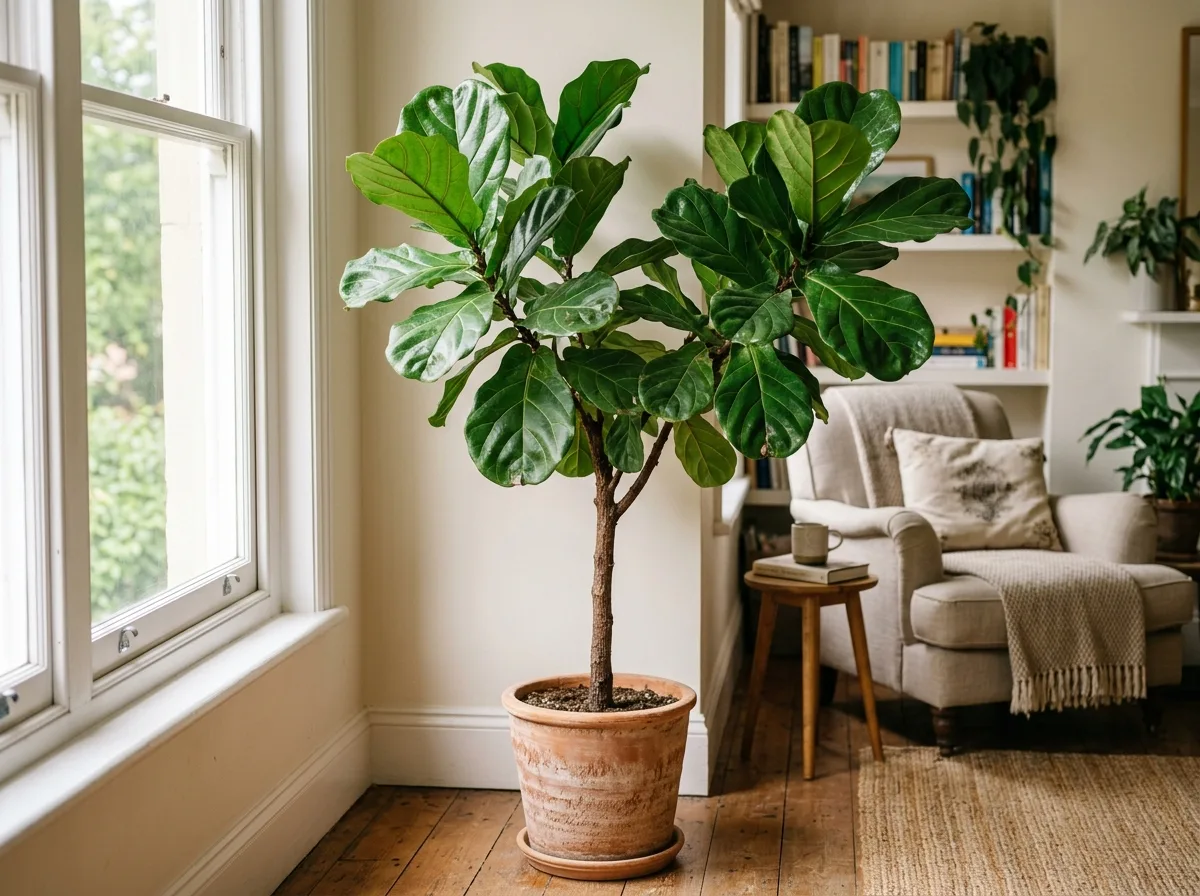
Beautiful yet famously dramatic, the Fiddle-Leaf Fig (Ficus lyrata) is prized for its sculptural, violin-shaped leaves. Master stable light and watering with this research-backed guide. Custom watering schedule
Light & Window Placement (800–2,000 FC (8,600–21,500 Lux))
Requires abundant, consistent bright indirect light plus gentle morning sun (east-facing window). Rotate 90 degrees monthly for straight trunk growth.
Watering Schedule & Technique
Water deeply when the top 2 inches of soil feel dry (roughly every 7–10 days). Avoid both bone-dry drought and soggy saucers.
Potting Soil Mix & pH (6.0–7.0)
Fast-draining, airy potting mix amended with 30% perlite and pine bark fines to prevent root asphyxiation.
Fertilizer & Feeding
Use a 3-1-2 NPK foliage formula every 4 weeks from April through September.
Temperature & Humidity
Prefers 45%–65% humidity. Keep far away from AC vents, radiators, and cold exterior doors.
Propagation
Take a 6–8 inch woody stem tip cutting with 2–3 leaves, dip the cut end in rooting hormone, and root in bright, warm water or moist perlite.
Pet Toxicity (Cats & Dogs)
Toxic to cats and dogs (ficin and psoralen sap irritates skin and GI tract). Full cat & dog toxicity profile
Track Fiddle-Leaf Fig Care in Leafy for Android
Watering reminders and live camera troubleshooting on your phone.
- Distinguish harmless edema from dangerous bacterial leaf spot or root rot via AI camera
- Maintain ultra-consistent watering intervals to prevent shock leaf drop
- Monthly 90-degree rotation & leaf-dusting reminders
- Hands-free voice & video guidance during repotting and pruning

Common Problems & Fixes
Dark brown blotches spreading from leaf centers
Primary cause: Root rot caused by wet, oxygen-starved soil.
How to fix: Inspect root ball immediately, prune black mushy roots, repot into chunky mix, and lengthen watering intervals.
Sudden dropping of green, healthy leaves
Primary cause: Drafts, temperature swings, or relocation shock.
How to fix: Keep in one stable, bright, draft-free spot; give it 3–4 weeks to acclimate without overwatering.
Tiny rust-colored speckles on brand-new leaves
Primary cause: Edema from irregular watering bursts while leaves form.
How to fix: Water on a consistent moisture threshold; existing speckles fade naturally as the leaf matures and turns dark green.