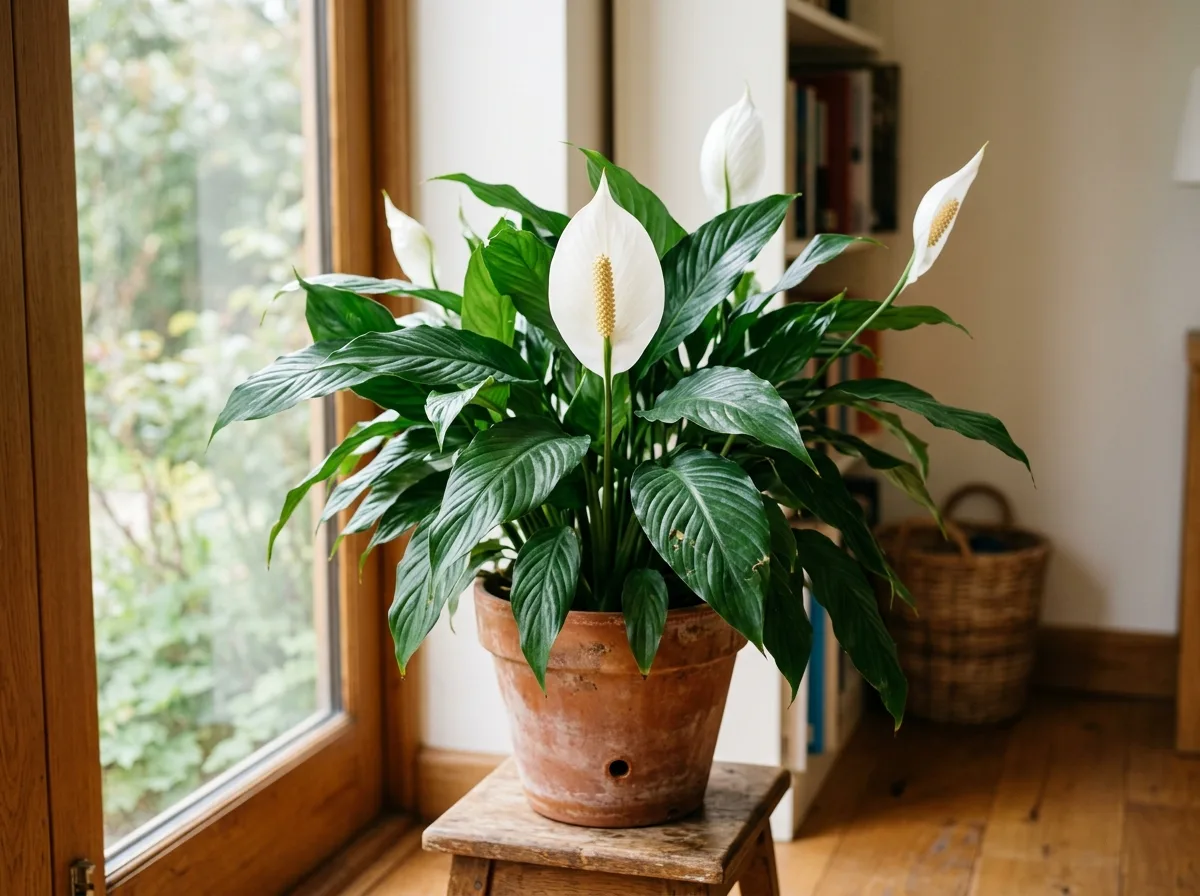
Celebrated for glossy emerald foliage and sculptural white spathes, the Peace Lily communicates thirst visibly and flourishes in low-to-medium indoor light. Custom watering schedule
Light & Window Placement (200–800 FC (2,150–8,600 Lux))
Thrives in medium to low indirect light. Brighter indirect light (500+ FC) triggers reliable white flowering; direct sun scorches leaves.
Watering Schedule & Technique
Water thoroughly when the top 1 inch of soil dries—right before dramatic wilting. Sensitive to chlorine and fluoride in hard tap water.
Potting Soil Mix & pH (5.8–6.5)
Moisture-retentive yet airy tropical mix: coco coir, compost, fine orchid bark, and 20% perlite.
Fertilizer & Feeding
Apply balanced organic houseplant fertilizer every 6 weeks in spring and summer to fuel spathe production.
Temperature & Humidity
Prefers 50%–65% humidity. Keep away from dry heating vents.
Propagation
Divide crowded root clumps during spring repotting, ensuring each crown section retains healthy white roots and 3+ leaves.
Pet Toxicity (Cats & Dogs)
Toxic to cats, dogs, and humans if chewed (insoluble calcium oxalate crystals; Note: not a true Lilium, which causes acute feline kidney failure, though still unsafe). Full cat & dog toxicity profile
Track Peace Lily Care in Leafy for Android
Watering reminders and live camera troubleshooting on your phone.
- Catch watering day 24 hours before your Peace Lily wilts
- Tap-water mineral flush & bloom-cycle care reminders
- Instant AI leaf tip diagnosis to separate fluoride burn from fungal blight
- Pet-safety household audit across your indoor collection

Common Problems & Fixes
Dramatic full-plant drooping
Primary cause: Turgor pressure drop from dry soil.
How to fix: Soak soil thoroughly (or bottom-water for 20 minutes); leaves stand upright again within 2–4 hours.
Crispy brown leaf tips
Primary cause: Fluoride/chloramine in municipal tap water, salt buildup, or dry air.
How to fix: Switch to filtered, distilled, or rainwater and flush soil quarterly.
Green flowers or zero blooms
Primary cause: Green spathes indicate aging blooms or excess nitrogen; zero blooms mean light is too dim.
How to fix: Move closer to an east/north window for brighter filtered light and avoid high-nitrogen lawn/foliage feeds.