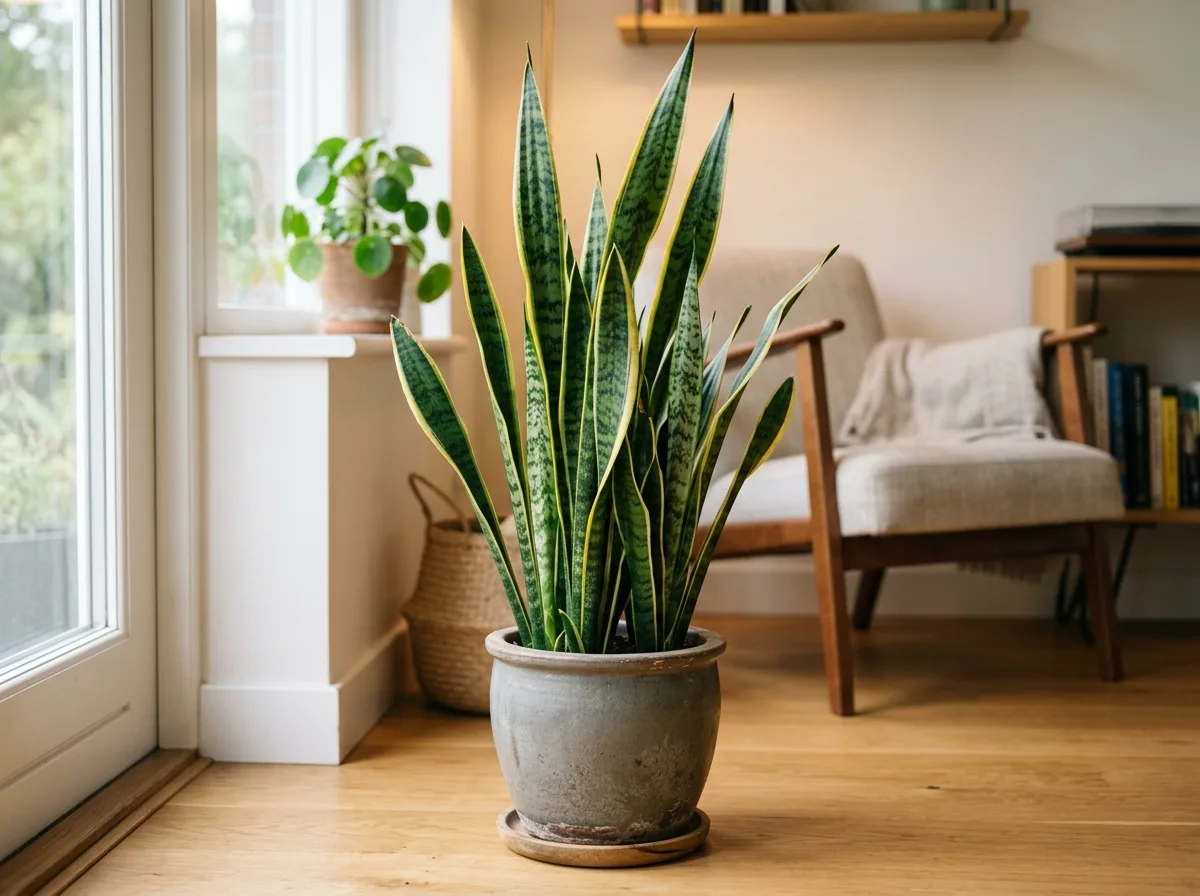
Virtually indestructible and capable of night-time CAM oxygen release, the Snake Plant (Mother-in-Law's Tongue) thrives from sunny living rooms to dim bedroom corners. Custom watering schedule
Light & Window Placement (100–1,500 FC (1,000–16,000 Lux))
Adaptable from low-light corners (100 FC) to bright indirect sun. Growth is 3× faster in bright indirect light.
Watering Schedule & Technique
Let the entire pot dry 100% top-to-bottom between waterings—typically every 2–3 weeks in summer and every 5–7 weeks in winter.
Potting Soil Mix & pH (5.5–7.5)
Gritty cactus/succulent soil blended with 40% pumice or coarse perlite. Terracotta pots are ideal.
Fertilizer & Feeding
Feed lightly twice per year (late spring and midsummer) with diluted succulent fertilizer.
Temperature & Humidity
Thrives in normal dry household air (25%–50%); never mist the crown.
Propagation
Divide rhizome pups during repotting (preserves yellow leaf margins) or root V-notched 4-inch leaf cuttings after callusing for 48 hours.
Pet Toxicity (Cats & Dogs)
Mildly toxic to cats and dogs (saponins can cause nausea if chewed). Full cat & dog toxicity profile
Track Snake Plant Care in Leafy for Android
Watering reminders and live camera troubleshooting on your phone.
- Seasonal winter dormancy adjustments so you never accidentally overwater
- Early rhizome rot detection via live camera check-ins
- Low-light room placement recommendations for apartments and offices
- Step-by-step division & leaf-cutting propagation tracker

Common Problems & Fixes
Mushy, foul-smelling, yellowing leaf bases
Primary cause: Overwatering or water trapped in leaf rosettes.
How to fix: Unpot immediately, cut away rotted rhizomes, dust cuts with cinnamon/sulfur, and repot in dry cactus mix.
Wrinkled, vertically puckered blades
Primary cause: Extended dehydration (or severe root loss preventing uptake).
How to fix: Bottom-water thoroughly for 25 minutes until rehydrated, then drain completely.
Tall blades flopping or bending over
Primary cause: Very dark placement producing weak cell walls.
How to fix: Transition gradually to brighter indirect light so new sword leaves grow thick and upright.