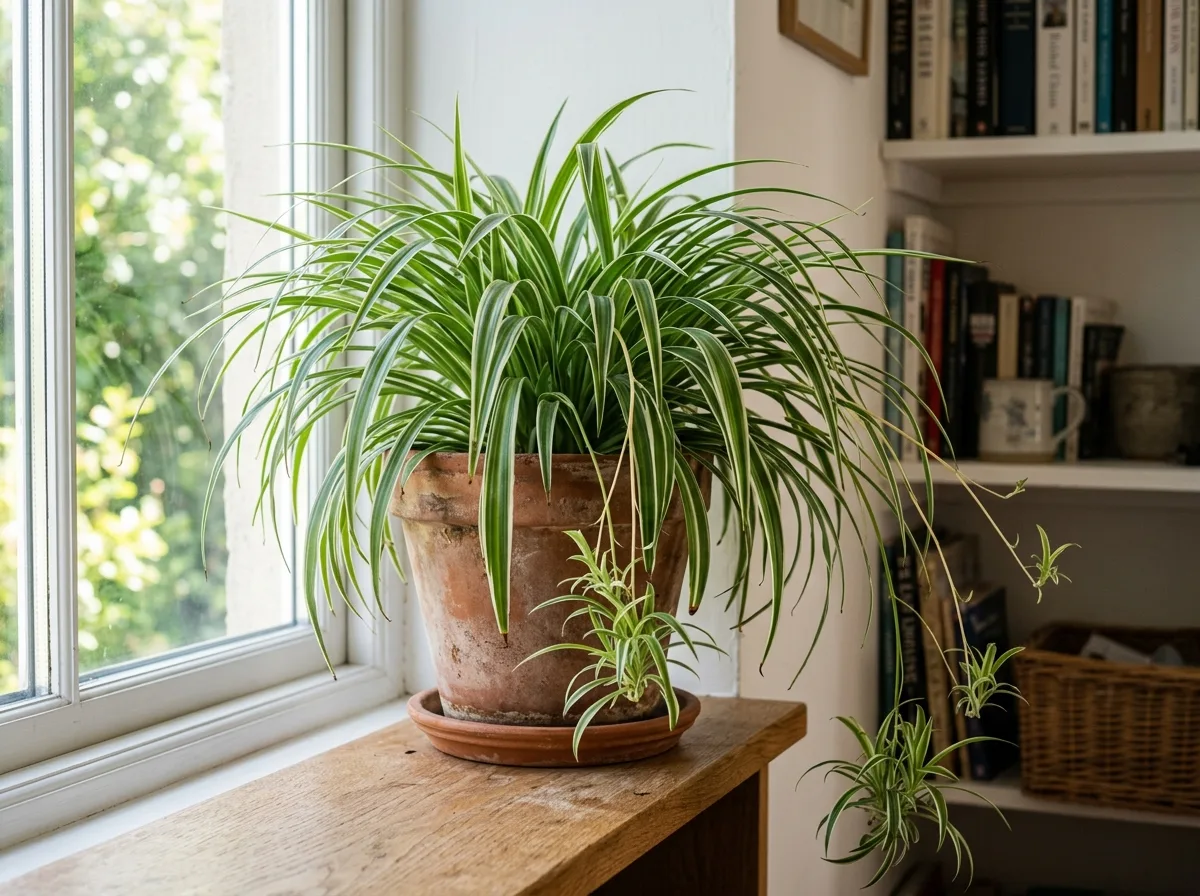
Non-toxic to pets, resilient, and famous for cascading baby "spiderettes", the Spider Plant is a top hanging-basket favorite for beginners and pet owners alike. Custom watering schedule
Light & Window Placement (250–1,000 FC (2,700–10,700 Lux))
Bright indirect light keeps white/cream variegation crisp; tolerates low light with slower growth.
Watering Schedule & Technique
Water when the top 50% of soil is dry. Fleshy tuberous roots store water, providing generous drought forgiveness.
Potting Soil Mix & pH (6.0–7.0)
Loamy, fast-draining all-purpose potting soil with 20% added perlite.
Fertilizer & Feeding
Feed lightly once a month in spring/summer; excess fertilizer causes brown tips and suppresses runner production.
Temperature & Humidity
Comfortable at 40%–60% household humidity.
Propagation
Pin attached baby spiderettes onto a small pot of moist soil until rooted, or snip plantlets with root nubs and place bases in water for 10–14 days.
Pet Toxicity (Cats & Dogs)
100% Non-toxic to cats and dogs (ASPCA verified pet-safe; cats often enjoy nibbling leaves, so hang baskets high!). Full cat & dog toxicity profile
Track Spider Plant Care in Leafy for Android
Watering reminders and live camera troubleshooting on your phone.
- Interactive spiderette propagation log for gifting baby plants
- Automated soil-flushing reminders to keep tips emerald green
- Verified Pet-Safe badge for cat and dog households
- Quick camera health check when repotting root-bound tubers

Common Problems & Fixes
Brown, burnt leaf tips
Primary cause: Fluoride/boron sensitivity from tap water or fertilizer salt accumulation.
How to fix: Water with rainwater or filtered water and leach the pot thoroughly every 2 months.
Pale, washed-out leaves with faded stripes
Primary cause: Direct midday sun bleaching or extreme root-bound pot.
How to fix: Filter harsh sun with a sheer curtain and check if thick white tubers are bursting the pot.
No baby spiderettes appearing
Primary cause: Insufficient daylight hours, juvenile age, or oversized pot.
How to fix: Keep slightly snug in its pot with bright indirect day-and-dark night cycles (avoid 24/7 room lights at night).