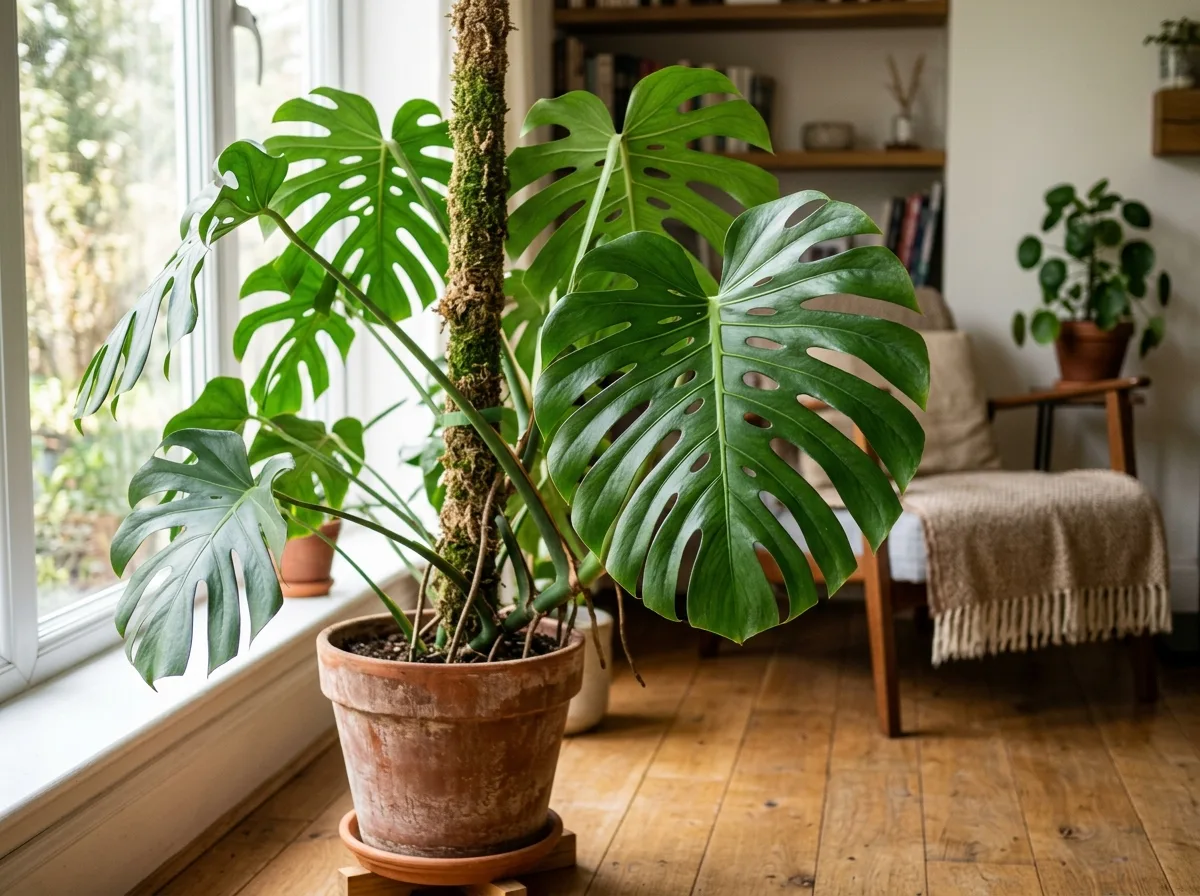
Famous for lacy, oval leaf perforations covering over half the blade, Monstera adansonii climbs rapidly up moss poles or cascades from hanging planters. Custom watering schedule
Light & Window Placement (400–900 FC (4,300–9,700 Lux))
Bright indirect light (east window or filtered south/west). Direct midday sun bleaches delicate perforated tissue.
Watering Schedule & Technique
Water every 6–8 days when the top 1.5–2 inches of soil dry; thinner leaves dry faster than Monstera deliciosa.
Potting Soil Mix & pH (5.5–7.0)
Chunky airy aroid mix: 40% coco coir, 30% fine orchid bark, 20% perlite, 10% worm castings.
Fertilizer & Feeding
Feed every 3–4 weeks in spring/summer with half-strength foliage fertilizer rich in nitrogen and magnesium (3-1-2).
Temperature & Humidity
Loves 55%–75% humidity; ideal candidate for bathroom windows or greenhouse cabinets.
Propagation
Snip a 2-node vine cutting with aerial root nubs and root in water or damp sphagnum moss for 2–4 weeks.
Pet Toxicity (Cats & Dogs)
Toxic to cats and dogs (calcium oxalate raphides). Hang baskets out of paw reach. Full cat & dog toxicity profile
Track Swiss Cheese Vine Care in Leafy for Android
Watering reminders and live camera troubleshooting on your phone.
- Snap a photo to confirm Swiss Cheese Vine cultivar & leaf health
- Get adaptive 7-day baseline watering notifications adjusted for your room
- Diagnose leaf yellowing or pest damage over a live AI video call
- Log growth milestones and repotting dates in your digital garden

Common Problems & Fixes
Older leaves yellowing rapidly
Primary cause: Nitrogen hunger (heavy feeder) or soggy lower soil.
How to fix: Check drainage first; if roots are white and firm, feed half-strength balanced fertilizer.
Tiny unperforated leaves on long bare vines
Primary cause: Low light and lack of vertical climbing support.
How to fix: Move into 500+ FC bright indirect light and attach nodes to a damp moss pole.