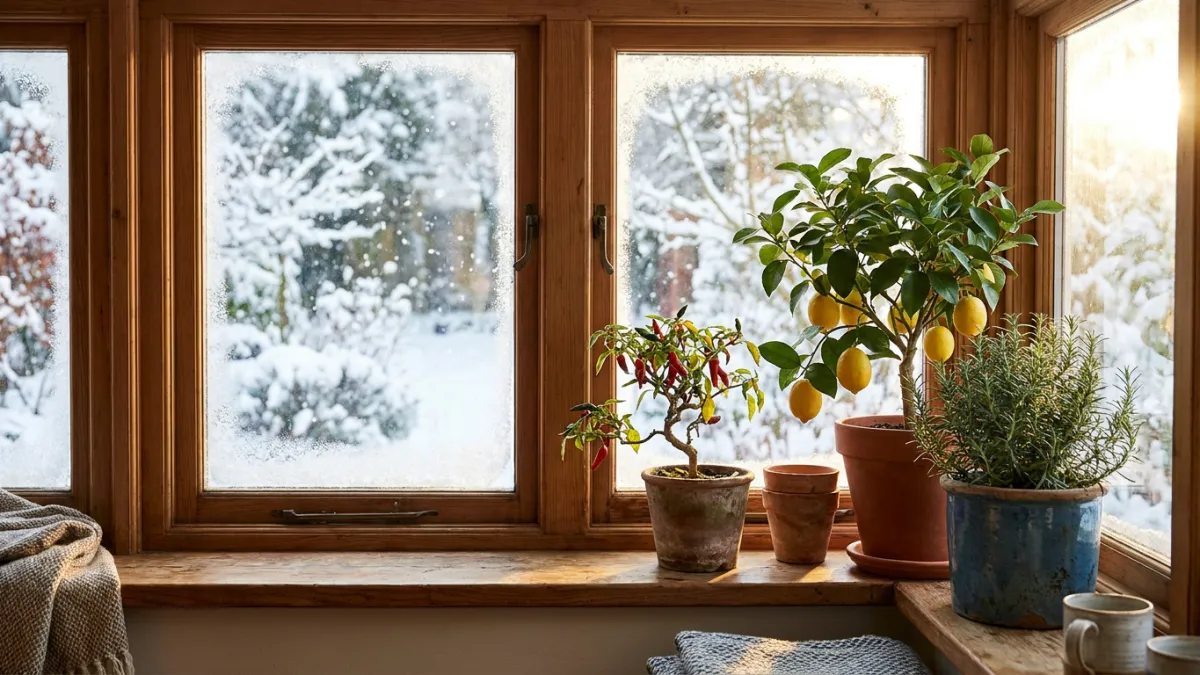
Chili and bell peppers (Capsicum spp.) are true woody tropical perennials—not disposable annuals—and overwintered Year-2 pepper trunks produce fruit 6 to 8 weeks earlier next summer! Success hinges on three rules before nights dip below 48°F (9°C): execute a strict outdoor pest decontamination & soil swap, separate dormant-pruned crops (peppers, figs) from evergreen sun-lovers (Meyer lemons, rosemary), and keep citrus roots warm and airy to prevent Sudden Winter Leaf Drop.
Every autumn across Hardiness Zones 3 through 8, millions of gardeners pull thick, woody habanero, jalapeño, and bell pepper plants onto the compost pile at the first frost warning—while dragging patio Dwarf Meyer Lemons and Rosemary pots straight into heated living rooms, only to face an explosion of indoor aphids and a carpet of dropped citrus leaves three weeks later.
Both disasters stem from treating outdoor container plants like ordinary tropical foliage houseplants. Here is the exact physiological playbook to bring tender crops through winter unscathed and launch into spring months ahead of seed-grown plants.
1. Why Outdoor Bugs Explode 10× Faster Inside Your Living Room
Outdoors on a sunny patio, three silent allies keep aphids, whiteflies, and spider mites in check: predatory insects (lacewing larvae, hoverflies, parasitic wasps), UV radiation, and heavy rain washing leaf undersides. The moment you carry an untreated garden pot indoors, you leave every natural predator outside while placing hidden pest eggs into dry, predator-free 70°F indoor air!
Execute this 5-step threshold quarantine 10–14 days BEFORE your zone's first frost (look up your exact autumn frost window on our Zone 3–11 Planting Calendars):
- Hose blast outdoors: Spray stems, leaf axils, and undersides thoroughly with a firm jet of water in the morning to dislodge 90% of hitchhiking aphids, mites, and whiteflies.
- Insecticidal Castile + cold-pressed neem wash: Coat all remaining stems and foliage (top and bottom) with diluted potassium-salt insecticidal soap or emulsified neem oil at dusk so oils never burn leaves in direct sun.
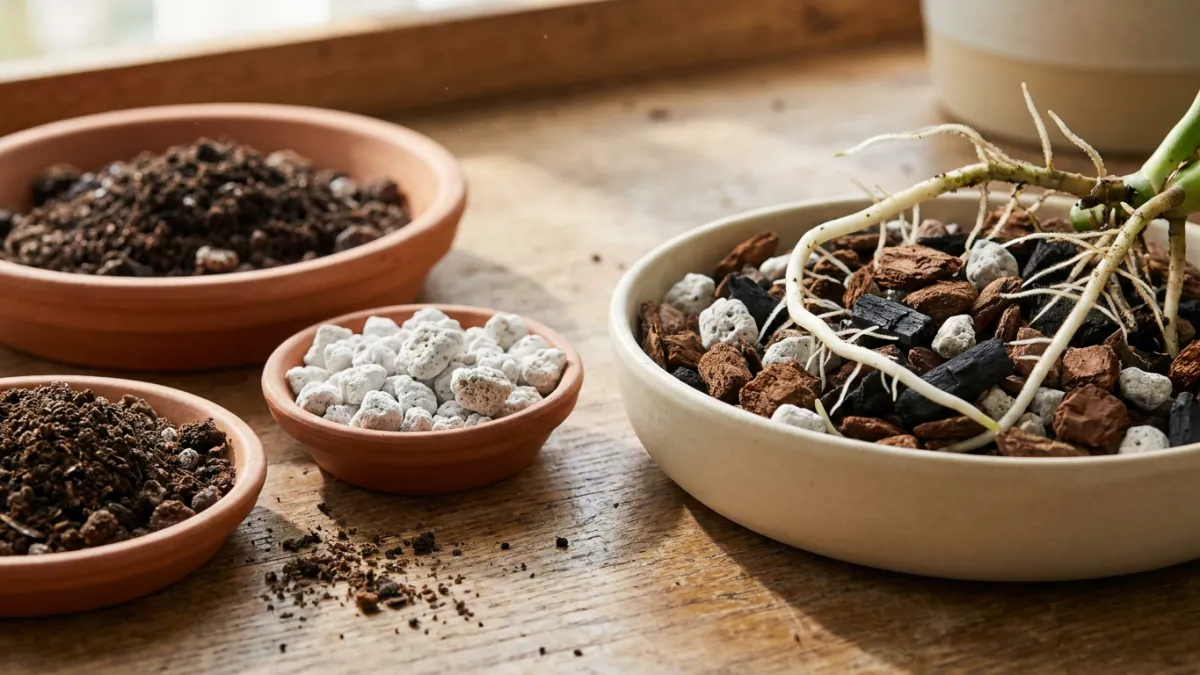
- Bare-root soil swap for dormant peppers (Critical!): Garden bed soil and summer patio compost harbor fungus gnat larvae, root aphids, slugs, and beetle grubs. Gently rinse summer soil off dormant pepper roots in a bucket of lukewarm water and repot into a smaller, clean 1–2 gallon pot filled with sterile, airy indoor substrate (calculate exact volume in our Soil Mix Builder).
- Top-dress evergreen citrus & herb pots: For Meyer Lemons and Rosemary whose fine feeder roots dislike bare-rooting, scrape away the top 1.5 inches of outdoor soil and replace it with clean horticultural pumice or coarse grit to block fungus gnat egg-laying.
- 14-day isolation room: Keep incoming patio pots in a bright spare room away from your indoor Monsteras and Calatheas for two weeks—and double-check cat & dog toxicity (remember: citrus essential oils/psoralens and nightshade pepper foliage are toxic to curious pets!).
2. Dormancy vs. Active Winter Sun: Species-by-Species Protocol
Not every tender patio crop wants the same winter treatment. Splitting your plants into Cool Semi-Dormant vs. Bright Evergreen Active prevents rot and weak, pest-magnet winter shoots:
| Crop / Species | Overwintering Mode & Pruning | Ideal Temp & Light | Winter Watering Rule |
|---|---|---|---|
| Chili & Bell Peppers (Capsicum annuum / chinense) |
Semi-Dormant Trunk ("Bonchi" Cut): Harvest all fruit, prune branches back to 2–3 main woody "Y" forks (6–8 in tall), and strip 95%–100% of leaves to eliminate pest hiding spots. | 55°F–64°F (13°C–18°C); bright indirect window or low LED (no heavy grow light needed until Feb). | Minimal! Without leaves, transpiration drops 90%. Give 1 small cup of water every 3–4 weeks just so roots never shrivel. |
| Dwarf Meyer Lemon (Citrus × meyeri) |
Evergreen Active Mode: Never strip healthy leaves! Keep root zone & canopy temperatures matched within 10°F. | 58°F–72°F; unobstructed south window + 450+ PPFD 3500K–4000K LED grow light for 12–14 hrs. | Deep water only when top 2–3 in dry completely; never let pot sit in cold saucer water. |
| Rosemary & Thyme (Mediterranean Woody Herbs) |
Cool Bright Sunroom Mode: Needs crisp air movement and gritty mineral drainage (hates warm, humid, dark kitchens!). | 45°F–62°F cool sunny sill + brisk airflow (prevents winter powdery mildew). | Let gritty terracotta pot dry 75% down before watering; zero winter fertilizer. |
| Potted Fig Tree (Ficus carica) |
True Deciduous Dormancy: Allow light 28°F autumn frost outdoors to drop leaves naturally before moving pot inside. | 32°F–45°F dark unheated garage, shed, or cold cellar (above 50°F wakes buds prematurely!). | 1 cup of water once a month purely to keep root ball barely damp until spring bud swell. |
3. Solving "Sudden Citrus Winter Leaf Drop"
Nothing panics a citrus grower faster than watching a healthy Meyer Lemon drop 40 green leaves overnight in December. Physiologically, Sudden Winter Leaf Drop is caused by root-to-shoot temperature mismatch: when a terracotta pot sits on a freezing 54°F tile floor beside drafty glass while a ceiling heating vent blows dry 74°F air across the canopy (spiking Vapor Pressure Deficit above 1.8 kPa), chilled citrus roots become sluggish and cannot pump water fast enough to match leaf transpiration. In self-defense, the tree abscises its leaves!
The 3-minute fix: Elevate indoor citrus pots off cold floors onto a cork trivet or wooden plant stand, aim heating vents away from foliage, add a dedicated 35W–40W full-spectrum pendant grow bulb 12 inches overhead, and verify winter hydration intervals in our Plant Watering Calculator.
4. Waking Dormant Peppers in February & Spring Hardening-Off
Around mid-February to early March (6–8 weeks before your spring last-frost date), move dormant pepper stumps into a warm 72°F spot under bright 300 PPFD grow lights, flush the pot thoroughly with lukewarm water, and apply quarter-strength balanced liquid fertilizer once fresh emerald shoots erupt from the woody nodes. Before moving overwintered peppers or citrus back into full May sun, acclimate them outdoors in dappled shade for 7 progressive days—indoor leaves grown behind UV-filtering window glass will bleach white in 90 minutes of raw midday UV without gradual hardening!
Keep Overwintered Citrus, Peppers & Herbs Thriving with Leafy AI
Switch your patio pots to winter schedules in Leafy AI on Android—and if you spot sticky honeydew, scale, or yellowing citrus leaves indoors, start a live AI camera call for instant step-by-step rescue advice.